Made for your needs
Choose the available variant and quantity that fits your requirement.
Fire Safety Equipment
A Fire Hydrant is an essential fixed fire-fighting system used to provide a dependable water supply during emergencies. It enables trained personnel and emergency teams to access pressurized water through hydrant outlets, helping control fires across industrial facilities, commercial buildings, warehouses, and other large premises.
Choose the available variant and quantity that fits your requirement.
Clear product information, specifications, and support in one place.
Add to cart or contact the seller without leaving the product page.
A Fire Hydrant system is a fixed fire-protection arrangement designed to make water readily available at designated points throughout a building or industrial site. It forms an important part of emergency fire-fighting infrastructure where portable extinguishers alone may not be sufficient for larger fire incidents.
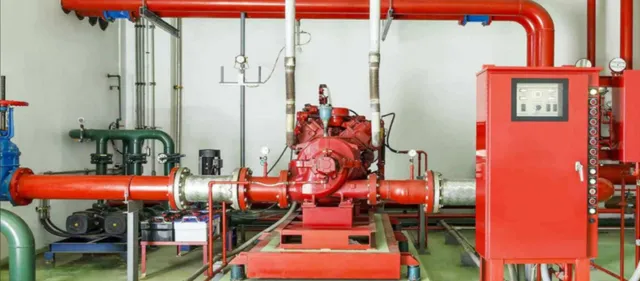
The system generally includes hydrant points, valves, piping, hoses, hose accessories, and associated water-supply equipment. Depending on the installation, water may be supplied through a dedicated fire-water storage and pumping arrangement. Hydrant outlets are positioned at suitable locations so trained responders can connect firefighting hoses and direct water toward the affected area.
For industrial and commercial properties in Coimbatore, proper planning of hydrant coverage is important because factories, warehouses, offices, production areas, parking facilities, and utility spaces can have different fire risks. Sameeksha Life Safety Equipments India Pvt. Ltd. provides fire-safety solutions for buyers looking for dependable fire-protection equipment and systems.
A hydrant installation is made up of multiple interconnected components rather than functioning as an isolated piece of equipment. The exact configuration depends on the building and the fire-protection design.
Hydrant valves provide controlled access to the fire-water supply, while connected piping distributes water to designated locations. Hose assemblies and compatible accessories allow trained personnel to convey water from the hydrant point toward the fire. The overall arrangement may also incorporate fire pumps, storage tanks, pressure-related equipment, and other components required by the project design.
The positioning of hydrant points should consider accessibility, building circulation, potential fire-risk areas, and the practical requirements of emergency response. Materials and component selection should be appropriate for the installation environment and compatible with the complete fire-fighting system.
During a fire emergency, trained personnel access the nearest suitable hydrant point and connect the required firefighting hose and nozzle arrangement. The hydrant valve is then operated to allow water to flow through the hose.
Water reaches the hydrant network from the connected fire-water supply arrangement. Depending on the installation, fire pumps and associated equipment help provide the water flow required by the system design.
The hose is directed toward the fire from a safe and suitable position. Personnel should follow the site's emergency response procedures and use the equipment only when appropriately trained. After an incident, hydrant components should be inspected, and any used or damaged equipment should be restored before the system is returned to normal readiness.
Fire hydrant systems are commonly considered for premises where a structured firefighting water network is required. Typical applications include:
The final system arrangement should be determined according to the property's fire risk, building characteristics, applicable requirements, and professional fire-safety planning.
A properly planned hydrant system provides a readily accessible firefighting-water network across larger premises. This can help trained emergency teams respond more effectively when a fire occurs.
Another important benefit is coverage. Instead of depending solely on portable firefighting equipment, a fixed hydrant arrangement can provide multiple designated connection points around the property.
The system can also be integrated with other fire-protection measures, including fire pumps, fire-water tanks, extinguishers, fire alarms, and other emergency systems. This allows the hydrant arrangement to form part of a broader fire-safety strategy.
For facility managers and EHS teams, maintaining clearly identified and accessible hydrant points can also support emergency preparedness and routine inspection activities.
The reliability of a hydrant system depends on appropriate design, correct installation, compatible components, adequate water supply, and regular inspection and maintenance. Hydrant valves, hoses, nozzles, piping, pumps, and associated equipment should be checked periodically for physical condition, accessibility, and operational readiness.
Hydrant areas should remain unobstructed so emergency personnel can access them quickly. Any leakage, corrosion, damage, missing accessories, or other abnormal conditions should be addressed promptly by qualified personnel.
For industrial buyers, selecting a hydrant solution should therefore involve more than purchasing individual components. The complete arrangement should be evaluated in relation to the site's fire-protection requirements and operating environment.
Sameeksha Life Safety Equipments India Pvt. Ltd. focuses on fire and workplace safety requirements for industrial and commercial users. Buyers searching for Fire Hydrant manufacturers in Coimbatore can consider the company's product and safety-system capabilities when planning fire-protection requirements for their premises.
A practical approach to fire-safety equipment involves understanding the application before selecting the configuration. Factors such as building size, occupancy, fire hazards, available water supply, hydrant locations, and integration with other fire-protection equipment need to be considered.
Sameeksha can support buyers, safety teams, facility managers, contractors, and procurement professionals in identifying suitable fire-safety solutions based on project requirements. For organizations looking for Fire Hydrant manufacturers in Coimbatore, the focus should remain on suitable system planning, compatible components, accessibility, inspection, and long-term maintenance rather than selecting equipment based only on price.
A Fire Hydrant is a fixed firefighting-water access point connected to a fire-water supply system. It allows trained personnel to connect hoses and direct water toward a fire during an emergency.
They are commonly used in factories, warehouses, industrial plants, commercial buildings, institutional premises, hotels, large residential developments, and other properties where a fixed firefighting-water arrangement is required.
Water is supplied through a connected fire-water network to designated hydrant points. During an emergency, trained personnel open the hydrant valve, connect the appropriate hose equipment, and direct water toward the fire from a suitable position.
Depending on the project, a hydrant arrangement can include hydrant valves, piping, hoses, nozzles, fire pumps, water-storage provisions, and other associated firefighting accessories. The exact configuration depends on the site's fire-protection design.
Hydrant points, valves, hoses, piping, pumps, and accessories should be inspected regularly. Access areas should remain clear, and leakage, corrosion, physical damage, or missing components should be corrected promptly.
Yes. Hydrant systems are commonly incorporated into fire-protection arrangements for manufacturing facilities and industrial premises, particularly where larger areas require fixed access to firefighting water.
Their location is determined during fire-protection planning based on factors such as building layout, fire-risk areas, accessibility, coverage requirements, and applicable project requirements.
Yes. A hydrant arrangement can form part of a broader fire-protection system that may include fire pumps, water tanks, fire alarms, portable extinguishers, hose equipment, and other safety measures.
Buyers should consider the building layout, occupancy, fire hazards, water-supply arrangement, required hydrant locations, component compatibility, maintenance requirements, and applicable fire-safety requirements before finalizing the system.
Choose a supplier or manufacturer based on its understanding of the application, product suitability, system integration capabilities, component quality, installation requirements, and after-sales support. The selected solution should match the specific fire-protection needs of the property.
Customer reviews
★ 0.0 (0 reviews)
Loading reviews...
Similar Picks